
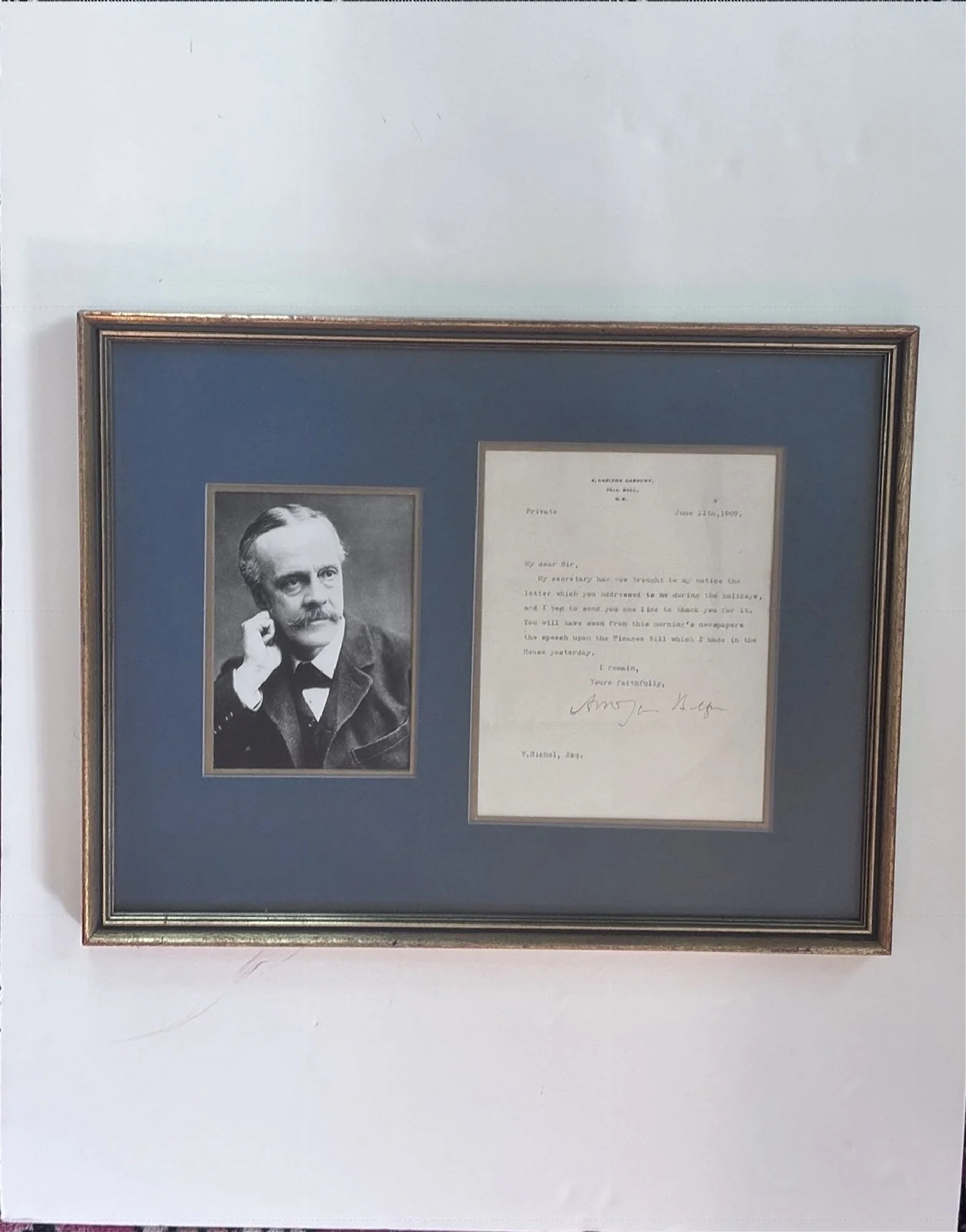
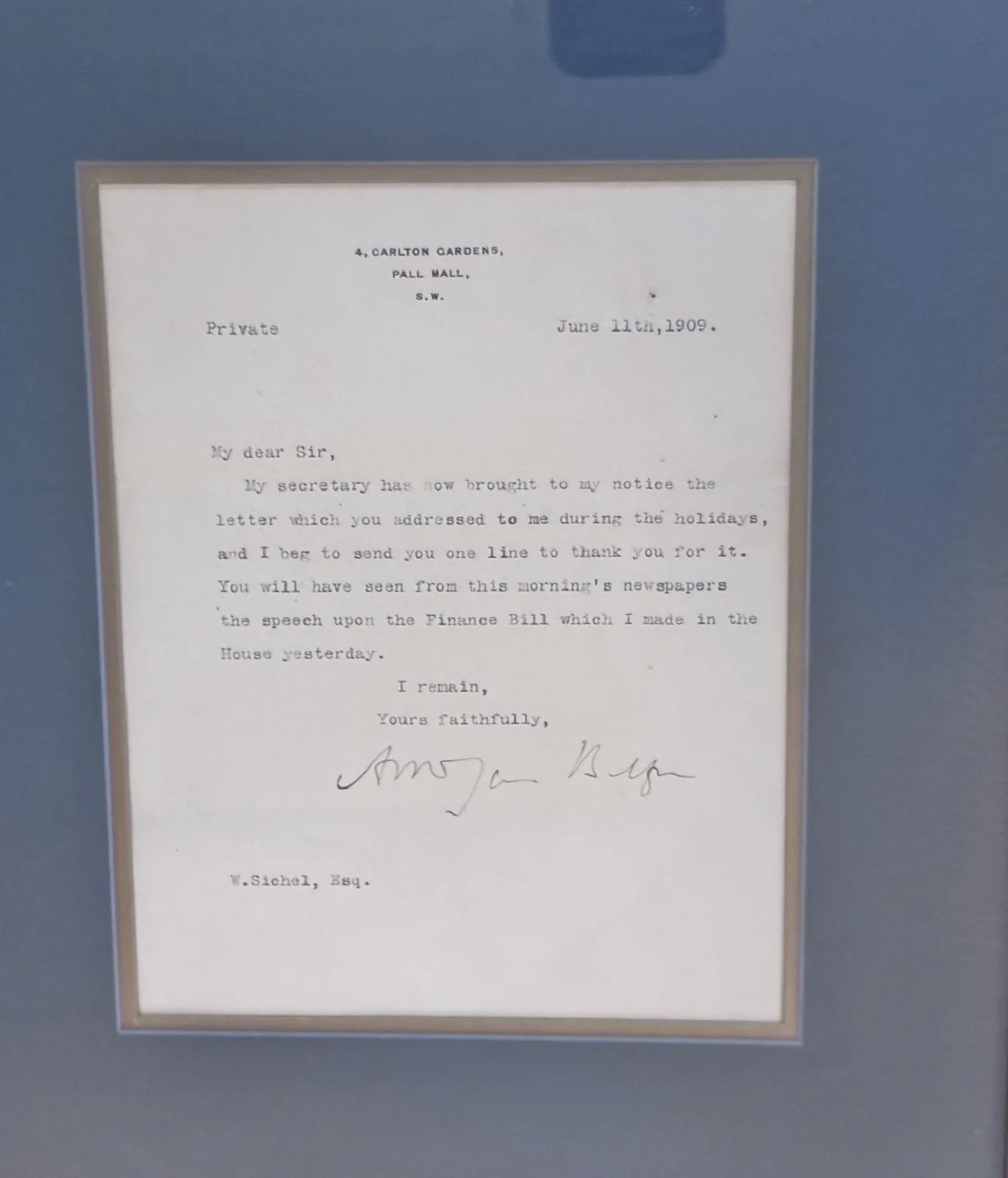
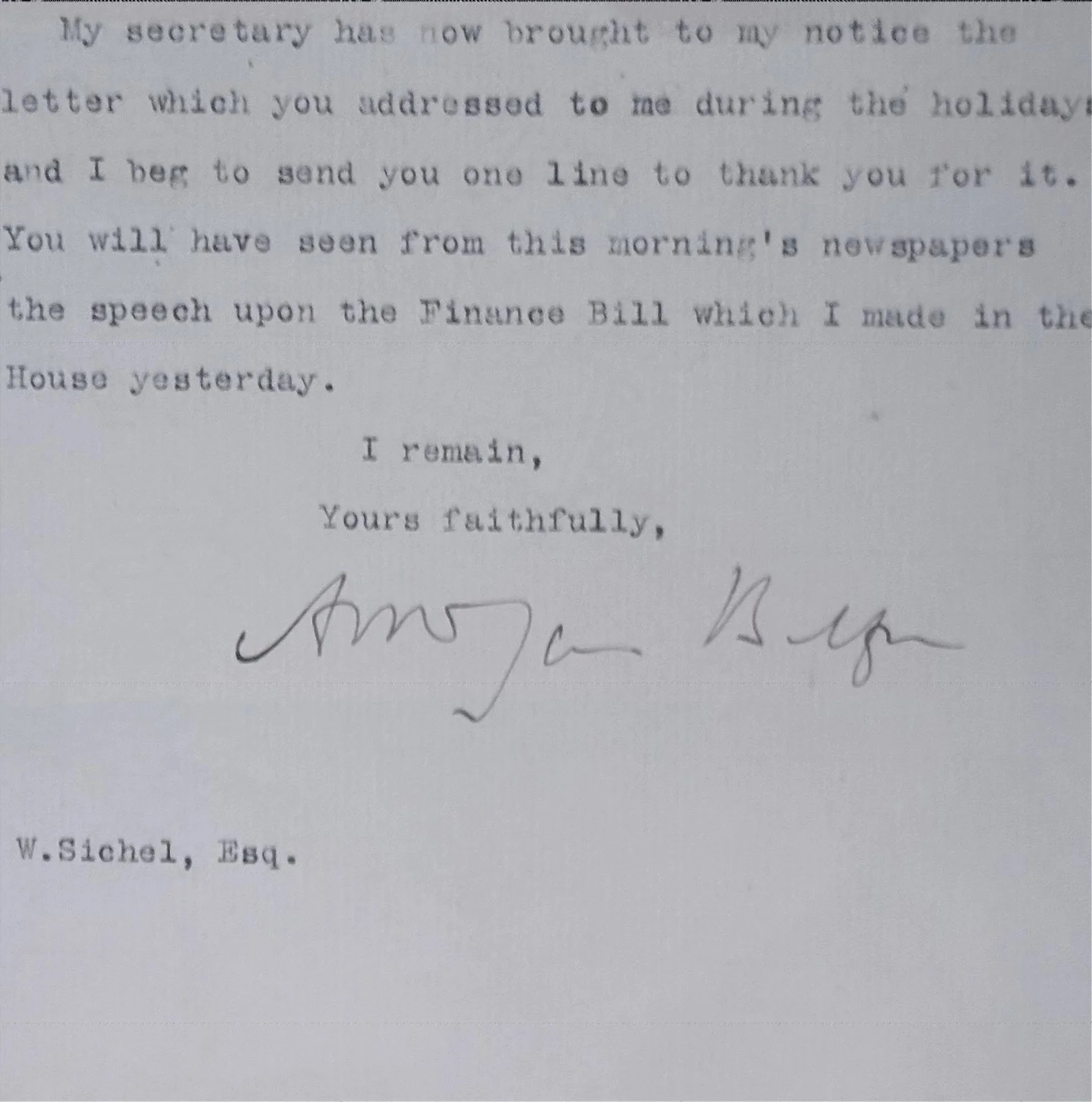
Arthur Balfour – LS, “Arthur James Balfour,” June 11, 1909, one page, on his personal stationery of Carlton Gardens in Pall Mall. The letter is addressed to W. Sichel, likely the British biographer and lawyer Walter Sydney Sichel. Balfour sends belated thanks for a letter and then draws his attention to a speech Balfour delivered in the House of Common on “the Finance Bill.”
The Finance Bill was the liberal budget proposed by Lloyd George, Chancellor of the Exchequer, which expanded social support and raised taxes. The People’s Budget, as it was called, passed the House was met with rejection from the House of Lords. That led to an English constitutional crisis that ended in both eventual passage of the budget and curtailment on the Lords’ ability to interfere in budget matters.
Lloyd George went on to become Britain’s Prime Minister between 1916 and 1922. Balfour served as Prime Minister between 1902 and 1905. Thrown out of office, he returned to the House of Commons in 1907, becoming a leading opponent of Lloyd George. That opposition, particularly over the Finance Bill referenced in this letter, led to further political setback for George and the Conservatives. George stepped down as Party Leader in 1911.
Balfour is more often remembered today for his role in promoting an Israeli state.
The letter is professionally framed with a nice photo and ready for display. It has not been examined outside of the frame.
[#6543]
Arthur Balfour – LS, “Arthur James Balfour,” June 11, 1909, one page, on his personal stationery of Carlton Gardens in Pall Mall. The letter is addressed to W. Sichel, likely the British biographer and lawyer Walter Sydney Sichel. Balfour sends belated thanks for a letter and then draws his attention to a speech Balfour delivered in the House of Common on “the Finance Bill.”
The Finance Bill was the liberal budget proposed by Lloyd George, Chancellor of the Exchequer, which expanded social support and raised taxes. The People’s Budget, as it was called, passed the House was met with rejection from the House of Lords. That led to an English constitutional crisis that ended in both eventual passage of the budget and curtailment on the Lords’ ability to interfere in budget matters.
Lloyd George went on to become Britain’s Prime Minister between 1916 and 1922. Balfour served as Prime Minister between 1902 and 1905. Thrown out of office, he returned to the House of Commons in 1907, becoming a leading opponent of Lloyd George. That opposition, particularly over the Finance Bill referenced in this letter, led to further political setback for George and the Conservatives. George stepped down as Party Leader in 1911.
Balfour is more often remembered today for his role in promoting an Israeli state.
The letter is professionally framed with a nice photo and ready for display. It has not been examined outside of the frame.
[#6543]